Introduction
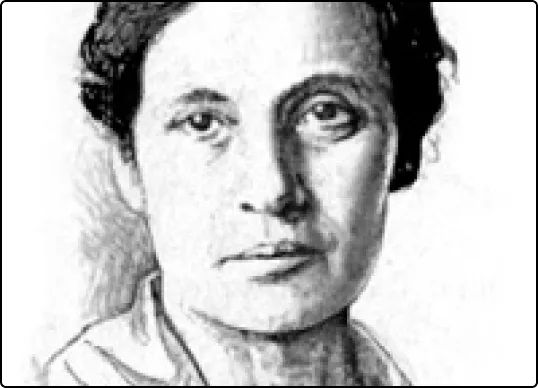
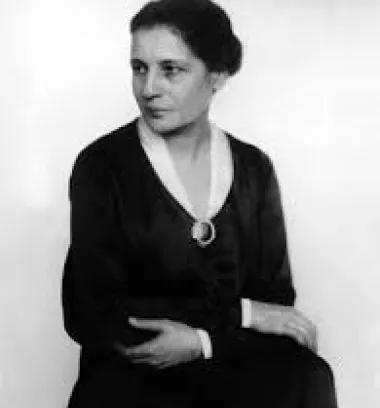
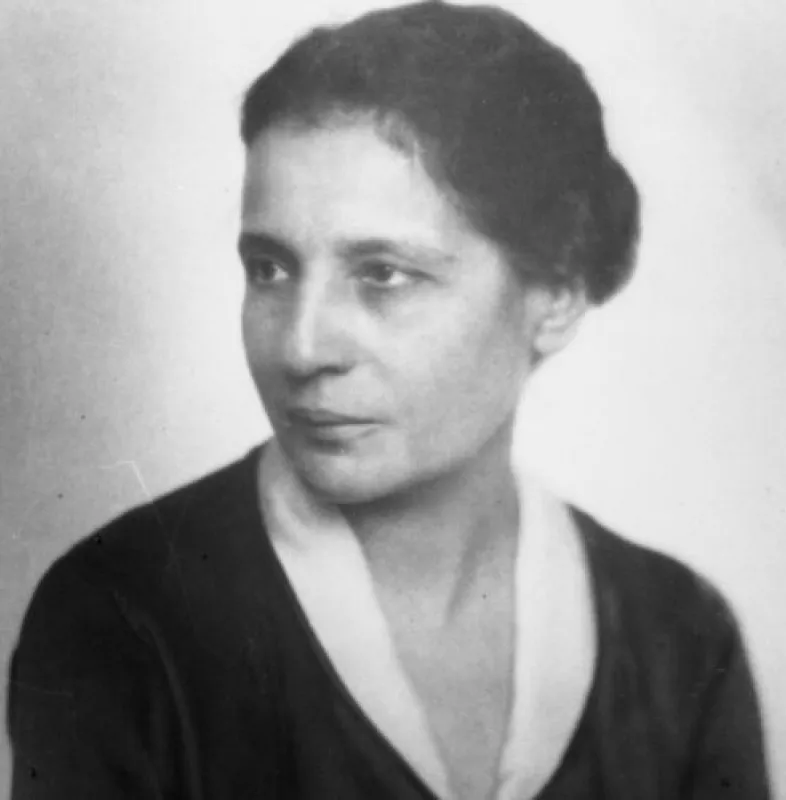
In the history of science, some figures have shone in the shadows. Lise Meitner is one of them.
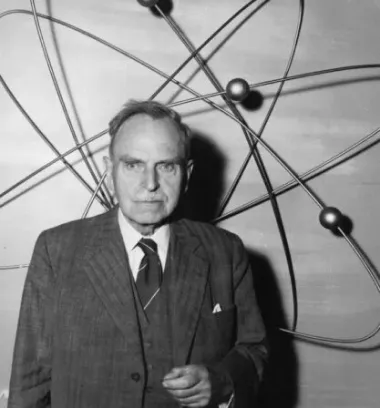
A brilliant Austrian physicist, she played a decisive role in the discovery of nuclear fission, a phenomenon at the origin of the atomic bomb and nuclear power plants. Yet her name remains largely unknown to the general public, overshadowed by that of her colleague Otto Hahn, the sole recipient of the Nobel Prize for this discovery.
The story of Lise Meitner is that of a woman who paved the way for a new scientific era while facing sexist prejudice and Nazi persecution.
A pioneer in a man’s world
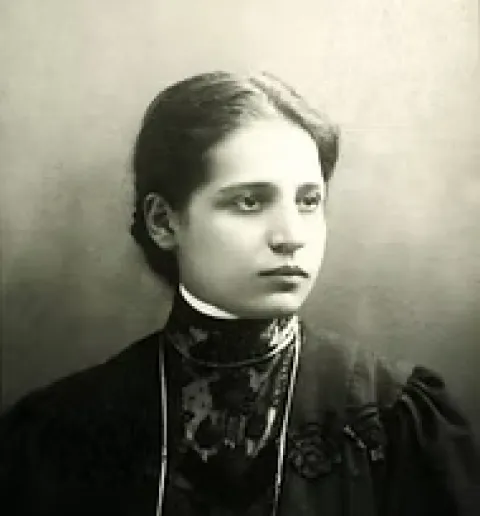
Born in 1878 in Vienna into a well-educated Jewish family, Lise Meitner showed a strong interest in physics and mathematics from an early age. At a time when women had limited access to higher education, she managed—thanks to her parents’ support—to take private lessons and enter the University of Vienna in 1901.
In 1906, she became the second woman to earn a PhD in physics in Austria, under the supervision of Ludwig Boltzmann, one of the greatest physicists of his time.
She then continued her career in Berlin, where she collaborated with the chemist Otto Hahn. For more than thirty years, they worked together on radioactivity and the properties of atoms.
Despite her recognized expertise, Lise Meitner faced constant discrimination: she was denied access to official laboratories and was forced to work in a basement, without pay, for several years.
The discovery of nuclear fission
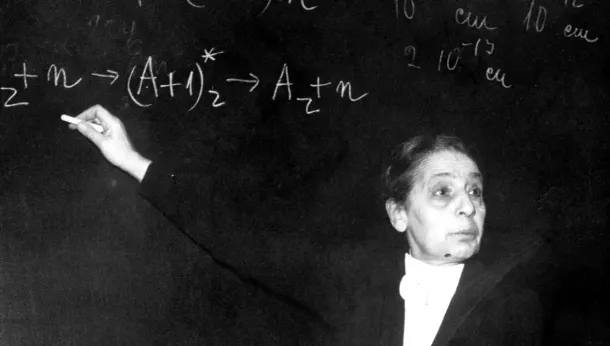
In the 1930s, Meitner and Hahn embarked on a fascinating scientific quest: bombarding uranium nuclei with neutrons in an attempt to create heavier elements.
But in 1938, their collaboration was abruptly interrupted by the Anschluss, the annexation of Austria by Nazi Germany. As a Jewish woman, Lise Meitner was in danger. With the help of Dutch and Swedish colleagues, she fled Germany and found refuge in Sweden.
A few months later, Otto Hahn sent her a troubling letter: experiments showed that bombarding uranium produced much lighter elements, such as barium. This did not correspond to any known theory.
From exile, Lise Meitner analyzed the results and understood what had happened: the uranium nucleus had split into two lighter fragments, releasing an immense amount of energy. She named this phenomenon nuclear fission.
In February 1939, she published a theoretical explanation with her nephew Otto Frisch in the journal Nature, laying the foundations of modern nuclear physics.
A belated recognition
Despite her essential role in the discovery of nuclear fission, Lise Meitner was completely ignored by the Nobel Committee. In 1944, the Nobel Prize in Chemistry was awarded exclusively to Otto Hahn, sparking intense controversy among scientists.
Lise Meitner was thus the victim of a double injustice: as a woman, she was systematically erased from the history of science; as a Jew, she was persecuted by the Nazi regime.
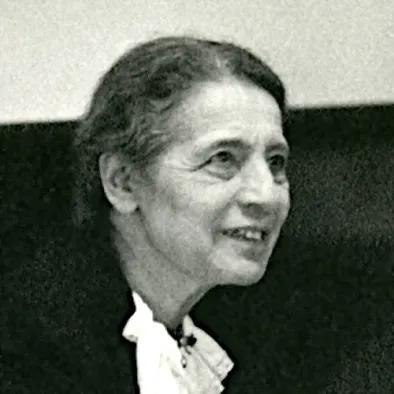
It was not until the 1960s that her work was finally recognized for its true value. She received numerous honorary distinctions, such as the Enrico Fermi Prize in 1966, and a chemical element was named in her honor: meitnerium (symbol: Mt).
Lise Meitner passed away in 1968 at the age of 89. Her story, long forgotten, is now being rediscovered and celebrated as an example of resilience and scientific genius.